
Himalayan-style chicken curry is a homestyle curry that originates from Nepal and the Himalayan foothills. It is made by slow-cooking bone-in chicken in mustard oil with onions, ginger, garlic, tomatoes, turmeric, cumin, and coriander. The dish is then finished with timur (Himalayan Sichuan pepper).
If you have only ever had chicken curry from a standard Indian takeout menu, the Himalayan version will surprise you. There is no cream, no cashew paste, and no food coloring. The dish's richness comes from slow-cooking onions in pungent mustard oil, cooking chicken on the bone, and a whole-spice tempering that perfumes the pot before anything else goes in.
This guide gives you the traditional recipe for the dish, explains exactly how Himalayan chicken curry is different from Indian chicken curry, and tells you where to taste the best Himalayan cuisine in Richardson, Texas.
Himalayan-style chicken curry is generally called kukhura ko masu (chicken meat) or kukhura ko tarkari in Nepali. It is a widely consumed dish and often forms a staple part of people’s day-to-day meals. The dish’s whole essence sits between spices from India like turmeric, cumin, and garam masala and Tibet’s ingredients like timur and jimbu.
You may also see this dish called Nepali chicken curry, Nepalese chicken curry, Himalayan chicken masala, mountain-style chicken curry, or home-style Nepali chicken tarkari. These terms refer to the same family of recipes.
Although both styles are popular and widely loved, Himalayan chicken curry is different from Indian chicken curry in 5 ways. It is cooked in mustard oil instead of ghee or butter, uses bone-in chicken, has a thin broth-like gravy with no cream, uses a short list of spices, and finishes off with Timur pepper for a citrusy and tingling bite.
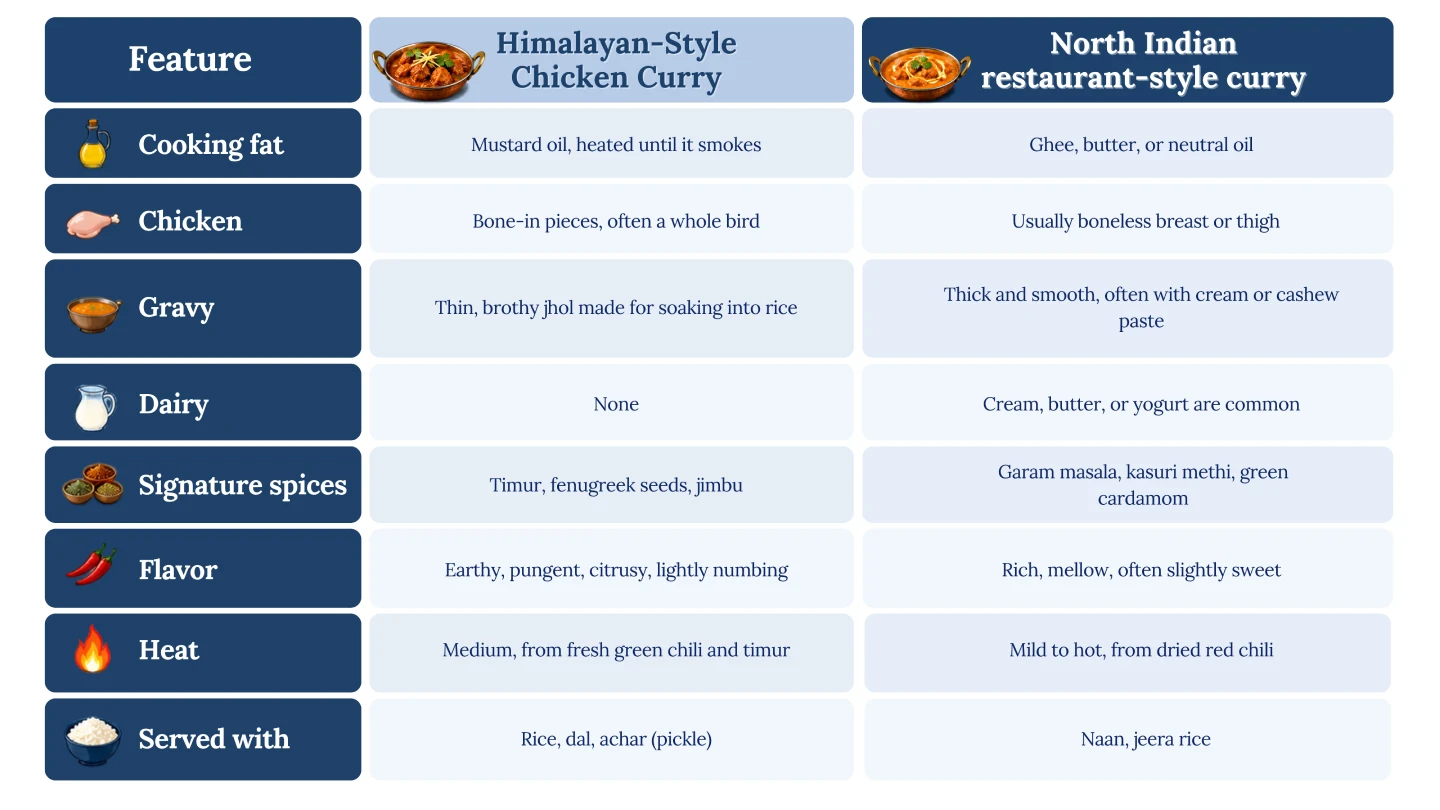
Bone-in chicken releases collagen and marrow as it simmers. This makes the gravy gain volume without adding any cream. Mustard oil adds a sharp, nutty depth that ghee cannot. Timur works differently from black pepper: it is a high-altitude mountain pepper with a distinctly citrusy bite, and it leaves a gentle tingle on the lips.
While visiting a nice Nepalese or Indian restaurant in Richardson is always a treat, there’s something extra special about preparing a delicious home-style Nepali dish yourself! If you’ve never tried cooking one at home before, don’t worry. We’ll walk you through each step to help you make a flavorful chicken curry in your own kitchen.
Chicken: For this particular recipe, bone-in thighs and drumsticks are often considered a good choice. You can also use boneless chicken thighs as per your preference.
Timur: This traditional spice is a well-known ingredient used across several Richardson restaurants serving Himalayan cuisine. Timur showcases a citrusy note with a mild, lingering tingling effect.
Jimbu: This dried Himalayan herb has a savory, onion-like aroma. It is optional, so don't worry if you cannot find it at your local grocery store.
Cooking oil: Canola oil is a practical choice for home cooking in the United States. If you prefer mustard oil, check that the product is suitable and labelled for culinary use.
Total time: Approximately 1 hour 40 minutes (20 minutes of preparation, 30 minutes of marinating, and 50 minutes of cooking and resting).
Take a large bowl and add the chicken with turmeric, salt, ginger-garlic paste, and 1 tablespoon of oil. Mix everything well so all the pieces are evenly coated. Cover and refrigerate for a minimum of 30 minutes. You can also marinate the chicken overnight.
Heat the remaining 4 tablespoons of oil in a heavy-bottomed pot over medium heat. Let the oil heat thoroughly before adding the spices. Avoid overheating the oil.
Add the fenugreek seeds and cook for about 20–30 seconds until they become slightly dark and release their aroma. Avoid burning them, as this can make the curry bitter. Then add the cumin seeds, bay leaves, cloves, cardamom pods, and optional jimbu. Stir everything for another 20 seconds.
Add the sliced onions and cook over medium heat. Stir regularly until they turn deep golden brown. This step is important for the curry's flavor, so don't rush it and don’t let the onions burn.
Add the grated ginger, minced garlic, and slit green chilies. Cook for about 2 minutes. Stir until the raw smell fades and the aromatics become fragrant.
Add the marinated chicken to the pot. Stir well so the pieces of the chicken are coated well in the onion and spice mixture. Cook for about 8 minutes, turning the pieces occasionally.
Add the ground coriander, ground cumin, and Kashmiri red chili powder. Stir for about a minute. Then add the chopped tomatoes. Cook until the tomatoes soften and blend into the masala. With a little oil beginning to appear around the edges.
When you start noticing the oil separating from the tomatoes, pour in the hot water and stir everything to combine. Bring the curry to a gentle boil, then cover and simmer over low heat until the chicken is cooked and tender.
Turn off the heat and stir in the ground timur, if using, and the garam masala. Cover and let the curry rest for 5 minutes to allow the flavours to settle. Garnish with chopped cilantro before serving.
The chicken curry should have tender meat coated in a well-seasoned gravy. There should be enough sauce to spoon over rice or scoop up with roti. If you prefer a thicker gravy, simmer the curry uncovered for a few additional minutes. Keep stirring occasionally until it reaches the consistency you prefer.
Making chicken curry at home can be a rewarding experience, but sometimes you just want to sit back and enjoy a delicious meal. Visit Himalayan Corner, Richardson, TX's best Indian restaurant, and explore our menu of Nepalese and Indian favorites.
Here are five tips to get the most out of your Himalayan chicken curry in Richardson.
Chicken curry goes extremely well with steamed basmati rice, which soaks up the flavorful gravy. You can also serve it with a selection of assorted breads like roti, naan, or another flatbread. For a more complete meal, add a side of fresh cucumber salad, sautéed vegetables, or a simple lentil dish.
If you prefer a little extra heat, serve the curry with fresh green chilies on the side. A squeeze of lemon can also add a refreshing contrast to the spices.
Let the curry cool down a little before transferring it to an airtight container. Refrigerate it within two hours of cooking and use it within three to four days.
To reheat, warm the curry in a saucepan over medium-low heat. Stir occasionally so nothing sticks to the bottom of the pan. Add a splash of water if the gravy has thickened in the refrigerator. Make sure the chicken reaches an ideal temperature before serving.
Enjoying a bowl of flavorful chicken curry at home can be satisfying, but sometimes it's nice to let someone else cook. If you're looking for Himalayan chicken curry in Richardson, TX, Himalayan Corner is a place to explore for Nepalese and Indian flavors.
The menu is a blend of well-known Indian favorites and Nepalese dishes, giving diners the chance to explore different flavors under one roof. Whether you're looking to try some comforting curry, biryani, or Nepalese favorites such as momos, you can browse the menu to find a dish that suits your taste.
Discover Nepalese and Indian Flavors at Himalayan Corner.
If you're ready to enjoy a meal without preparing everything yourself, visit Himalayan Corner in Richardson, TX, and explore the menu to find your next favorite dish.
Himalayan chicken curry offers tender chicken in a flavorful curry that’s worth trying whether you're dining in, ordering out, or making it at home. If you are making it at home, the right ingredients and recipe can make the experience even more enjoyable. You can always adjust the spice levels and consistency to your taste preferences.
If you'd rather enjoy a meal without spending time in the kitchen, visit Himalayan Corner to explore Nepalese and Indian dishes in Richardson. Whether you're craving a flavorful curry or want to try something new, there's more to discover on the menu.
Let Himalayan Corner take care of your cravings! Enjoy the comforting flavors of Nepalese and Indian cuisine from the comfort of your home. Browse our menu, choose your favorites, and place your order online for a delicious meal in Richardson, TX.


