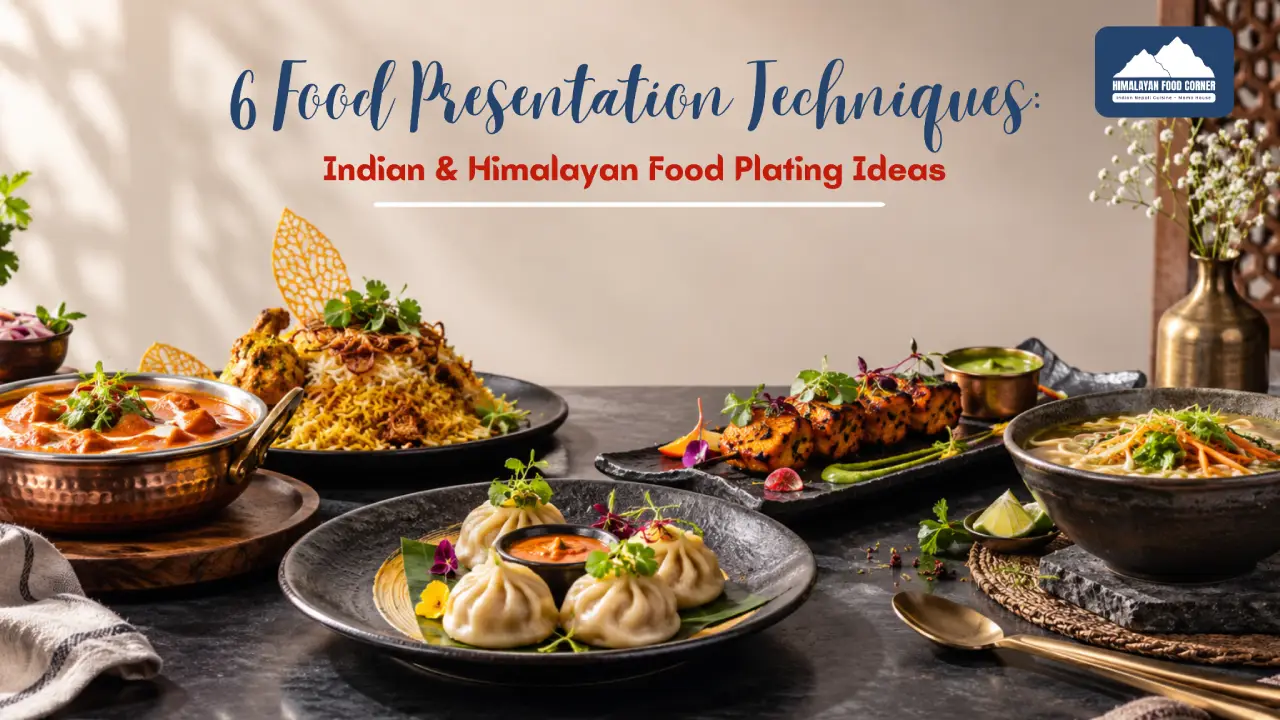
As the old saying goes, “We eat with our eyes first.” It is true. Before the first bite, we notice how the food looks, and attractive plating can make ordinary food look spectacular. This is especially true for Indian cuisine presentation, where rich colors, varied textures, fresh herbs, and diverse dishes make an attractive plate easier to achieve.
You don't need special equipment or professional training to serve food beautifully. Sometimes it only takes some minor alterations. In today's blog, we’ll cover 6 simple food presentation techniques to help you upgrade your everyday plating and make homemade food look like it came from a well-established restaurant.
One of the most effective techniques to enhance the aesthetics of food is color.
Indian cuisine naturally offers plenty of colors to work with. Imagine green palak, yellow dal, red curry, white rice, gold-colored naan, and fresh green coriander. These colors alone create a beautiful plate without any extra decoration.
You simply need to place the various colors alongside one another. For example, when serving a dark-cooked curry with rice, add green chutney or a side salad. But make sure you don't mix everything together and keep the plating clean so diners can see each item.
This is a simple Indian food plating idea, but it can change the whole look of your serving.
A common mistake is putting too much food on one plate.
India has a diverse food culture, and even a single meal includes 4-5 dishes: rice, dal, roti, salad, chutney, and raita. If you pile everything together, your plate will look messy; instead, leave a space between each dish.
You can place rice on one side, curry and vegetables in a small bowl, and roti or naan on the other side. Keep the salad or chutney in a small portion.
The plate doesn’t always have to look full; empty space makes the dishes stand out.
Thalis are a favorite across India because they let you try multiple dishes in one course.
The idea is simple: serve multiple dishes in one thali, but each has its own place. In some places, even in Richardson, you can have thalis with 10-12 dishes, including sweets, papad, lassi, etc.
You can use the same idea at home or anywhere else.
Place rice or roti as the main part of the thali. Add other dishes like curry, dal, and vegetables on the other part of the thali. You can use small bowls for gravy-based dishes so they don’t mix.
If you enjoy Indian vegetarian dishes, here are our top Indian vegetarian dishes that you should try at Himalayan Corner in Richardson.
Garnishing is one of the most underrated parts of Indian food plating ideas. A little garnishing can make food look fresh.
Fresh coriander is a go-to garnish in Indian cooking to enhance the dish’s aroma and take its presentation to the next level. Mint goes well with mocktails and chutney. Other ingredients like lemon, onion rings, or green chili are also good options for garnishing.
But there is no need to cover the entire dish with garnish; it can ruin the entire presentation.
It’s obvious that every plate has a main dish or a hero dish, and your meal should revolve around it. Whatever you're serving chicken tikka, chili paneer, manchurian, fish, or palak saag as the main dish, make sure it gets enough space on the plate.
The secondary food should enhance rather than disguise it. In other words, place rice alongside the main food, never above it. Do not combine both and also avoid placing salad or chutney directly on top of the main dish. If you are going to serve naan or other types of bread, then you should place them nicely in a folded form beside your main food.
This keeps the plate clear, so diners know exactly what the main dish is.
Different textures make the food more appealing.
A creamy curry with fluffy rice looks delicious. A crispy papad or salad would add a nice crunch to it. Indian and Himalayan foods have lots of textures, such as rice with dal, creamy naan with curries, momos with chutney, and fresh dips.
Make sure you arrange things neatly to avoid a messy presentation.
For example, if you are serving momos, place them neatly on a plate with the dipping sauce in a small bowl on the side. When serving the main food, place it in bowls to separate all items. Indian dishes have a simple presentation at heart; there's no need to overcomplicate it.
Looking for food plating ideas that go beyond the basics? Different types of Indian foods call for different methods of plating. Below are a few tips for presenting some of the most common and popular Indian dishes.
Presenting curries in a small bowl looks pretty neat. Place rice or naan next to the dish instead of mixing them. You can also use coriander to garnish it to make it look more appealing and fresh.
Adding a few coriander leaves or herbs will help improve the presentation.
Biryani can easily become the focal point of your plate.
Loosely arrange the rice so that it maintains its natural form. Add a few fried onions or coriander leaves if needed. Serve raita in a small bowl.
Tandoori chicken and paneer tikka already have a very attractive color because of their method of preparation. Arrange them neatly without piling them up. Place sliced onions, lemon, and chutney alongside the dish.
Usually, momos need to be served simply.
Arrange them in rows or circles. Separate the chutney from the momos so that it becomes easier for people to eat them.
This is a very good method of presenting both fried and steamed momos.
A thali gives you more freedom because several dishes are served together.
Use small bowls for dal, curry, and raita. Keep rice or roti in the main section of the plate. A small amount of pickle or salad can fill the remaining space.
The goal is to make the plate look full but not crowded.
A good presentation can make you more curious about the food.
A good Indian cuisine presentation matters even more here, since several dishes are often placed on the table at once. A good layout helps you distinguish dishes and know what you are eating.
It will also make your dinner special.
But a good presentation does not mean altering traditional cuisine for the sake of modernity. Indian and Himalayan cuisines have their own identity, so the best approach is to keep it simple.
Himalayan Corner will serve Indian and Himalayan dishes prepared to traditional tastes and made with traditional ingredients. Indian and Himalayan dishes include curries, biryanis, tandoori dishes, naan, and momos.
Here are a few simple food plating ideas you can keep in mind every time you serve:
You don't need fancy or costly plates to use these tricks. You just have to select a clean plate and arrange your food carefully.
Food presentation isn't about making food look complicated; it is about creating a neat, fresh, appetizing look.
The simplest food plating ideas often work best, and it all comes down to arranging your dish with good visibility, color, and spacing, plus a bit of detail like fresh herbs or lemon when suitable.
Food-presentation techniques mentioned in this blog work especially well for Indian and Himalayan cuisine, which offers plenty of color and flavor. So, whenever you cook curry, biryani, naan, or momos, spend a little extra time before serving and present it properly.
Founded by Umesh Adhikari, Himalayan Corner brings true Indian and Himalayan flavors to Richardson. With years of experience in the food industry, Umesh combines traditional recipes, quality ingredients, and warm hospitality to create a memorable dining experience.