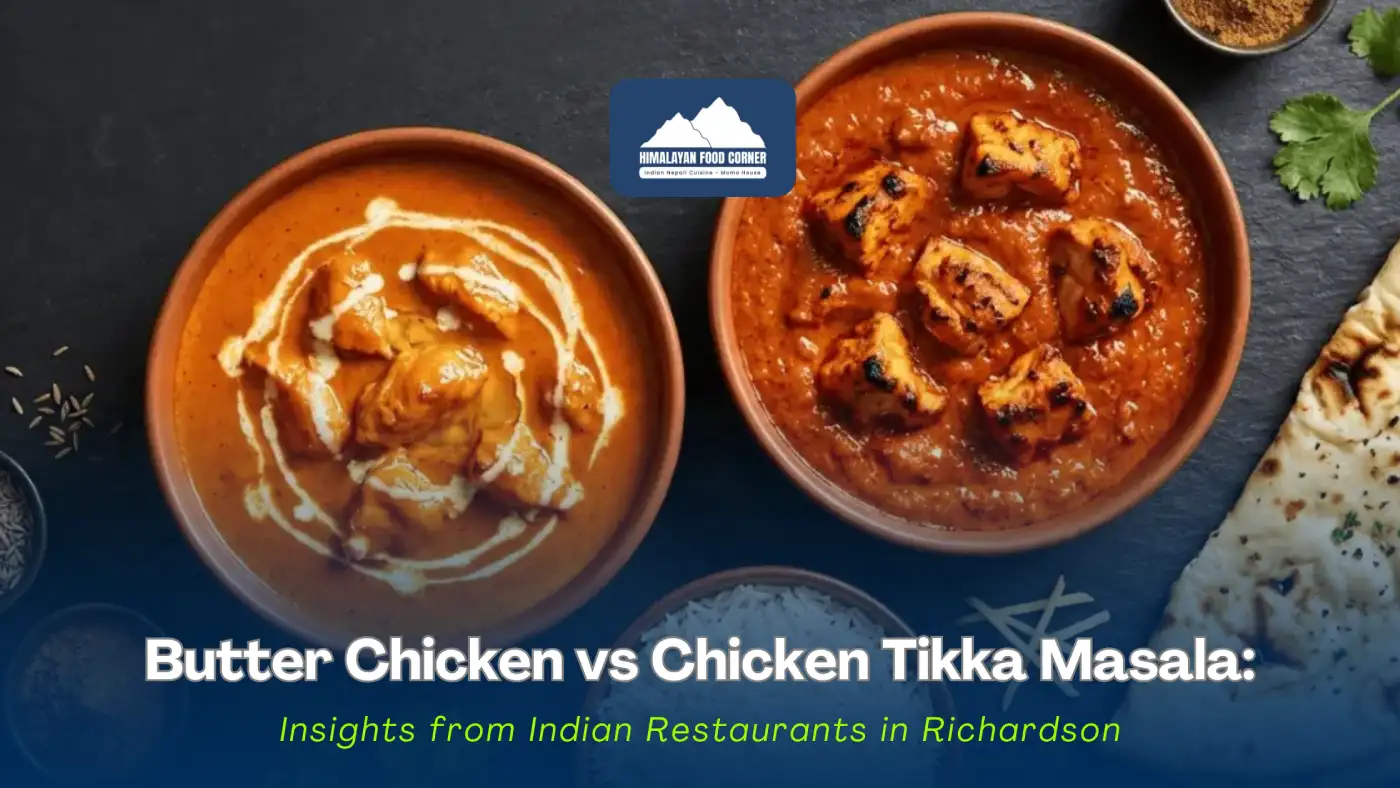
Which team are you in? Team Butter Chicken or Chicken Tikka Masala? We belong to both teams because we make both dishes. Okay, so we did our research and found that butter chicken is the most-ordered dish among Canadians, which is good.
But we are here for a different purpose. Today, it’s not about a competition between these two dishes but enjoying them both. If you are someone who always orders Butter Chicken or Chicken Tikka Masala when you visit Richardson Indian restaurants, this blog is for you.
Here, we will dive deeper into the gravies, the prepping, the spices, and everything. So, be ready with your phone because you’re definitely gonna be hungry.
Nope, we are not skipping this part because origin is what makes you, us, and these dishes beautiful. Oh, and tasty too!
Delhi, 1950s. A chef named Kundan Lal Gujral had leftover tandoori chicken after a long service at Moti Mahal restaurant. Instead of tossing it, he threw it into a tomato sauce with butter and cream. That's it. That's the whole story. One man's "let's not waste this" moment became the dish the entire world is now obsessed with: Murgh Makhani, or, as we all know it, Butter Chicken.
And honestly? We get it. The sauce is silky, mildly sweet, rich in butter and cream, and has a beautiful aroma from kasuri methi (dried fenugreek leaves) that just hits different. It is not here to challenge you with heat. It is here to make you feel good. No wonder it traveled from a Delhi kitchen all the way to Richardson and never left.
Here is where things get a little dramatic. Nobody can fully agree on where Chicken Tikka Masala actually came from. Some say India. Some say the UK, Glasgow or Birmingham specifically, where a chef in the 1970s apparently added a tomato-cream sauce to dry Chicken Tikka because a customer complained. British politicians once called it their national dish. Indians were not thrilled about that claim.
But here is the thing, wherever it came from, the dish is absolutely surreal, and that is why it ended up on every Indian restaurant menu from London to Richardson.
Okay, so yes, they both show up in a reddish-orange sauce, and yes, they both have chicken. We understand the confusion. But once you actually taste them side by side, there is no going back to mixing them up. Here is the quick version before we get into the details.
| Feature | Butter Chicken | Chicken Tikka Masala |
|---|---|---|
| Chicken Prep | Tandoori or grilled, sometimes cooked in a sauce | Always charred on skewers first |
| Sauce Base | Tomato, butter, heavy cream | Tomato, cream, onion, bold spices |
| Flavor Profile | Mild, sweet, buttery | Bold, tangy, complex |
| Heat Level | Low to medium | Medium to medium-high |
| Key Ingredient | Kasuri methi | Garam masala, charred chicken |
| Texture | Silky and smooth | Thicker, more body |
| Origion | Delhi, India | Debated |
| Best For | First-timers, comfort seekers | Spice lovers, the adventurous ones |
Good things are made of the 3 things: the base, the chicken, and the spices. These three are enough to turn your saddest or most melancholic hours into the most adventurous ones.
Butter Chicken's makhani sauce is made with smooth, blended tomatoes, butter, and cream until it becomes silky, slightly sweet, and totally comforting. Kasuri methi goes in right at the end, giving it that signature smoky-earthy finish. Some chefs sneak in a little honey, too. It is rich and gentle, the kind of sauce you want to mop up with naan until the bowl is CLEAN.
Now, what about Chicken Tikka Masala? Well, it’s bolder, tangier. Onions go in alongside the tomatoes, the spices are heavier, and the cream is there, but it is not running the show; the spices are. It builds on you with every bite. Where Butter Chicken is a warm hug, Tikka Masala is the friend who keeps things interesting.
In Butter Chicken, the chicken is marinated in yogurt and spices, cooked in a tandoor or grilled, and sometimes finished in the sauce. It comes out soft and juicy, basically becoming one with the gravy. Very cozy, very melt-in-your-mouth.
In Chicken Tikka Masala, the tikka is prepared first. The chicken is marinated, skewered, and cooked in a hot tandoor until it gets that char on the outside. That slightly smoky, slightly crispy exterior is what makes Tikka Masala taste like Tikka Masala. Skip the char, and you just have chicken in sauce. Not the same thing at all.
Butter Chicken keeps it measured. Cumin, coriander, turmeric, and garam masala are all present but in a balanced way. The MVP is kasuri methi, which pulls everything together and gives the dish its personality. It is warm and aromatic without ever making you reach for your water glass.
Chicken Tikka Masala stacks its spices like it has a point to prove. The marinade already has ginger, garlic, cayenne, cumin, and coriander working on the chicken. Then the sauce brings its own spice blend on top of that. The result is a dish that keeps revealing new layers the more you eat it. You think you've figured it out and then, nope, there's more.
There will always be a difference between having Butter Chicken or Chicken Tikka Masala at local restaurants and Indian restaurants. Here’s why:
Here is something most people do not think about when they are happily eating their Butter Chicken: where did those spices actually come from? Because that part matters more than you'd think. The Richardson Indian restaurants that consistently get it right are the ones sourcing their spices directly from Indian suppliers. Not the grocery store shelf version. The real stuff. And you can taste the difference immediately.
The tandoor oven is the other thing. A proper clay tandoor, run at the right temperature, is what gives Chicken Tikka that char and Butter Chicken its smoky base note. Some places cut corners here, and it shows up in the food. The Indian restaurants that have maintained traditional tandoors and actually use them are the ones worth going back to.
Richardson's Indian food scene is not one-dimensional. The community here represents different parts of India, and that shows up beautifully on the menus. One Richardson Indian restaurant might serve a Punjabi-style Butter Chicken that is heavier on the cream and deeply rich. Another might lean into a Mughlai influence, which has aromatic spices and a slightly thinner gravy.
Chicken Tikka Masala can vary even more wildly; some versions are smokier, some are tangier, and some carry a heat level that will genuinely surprise you. None of them is wrong. They are just different, and that variety is exactly what makes eating your way through Richardson so much fun.
You didn’t guess that, did you? Yes, these heavy-looking dishes don’t have unnecessary calories but good nutrients as well.
Let's be honest with each other here. Butter Chicken and Chicken Tikka Masala are definitely not salads. Both dishes are built on cream, butter, and oil. A typical restaurant serving of Butter Chicken ranges from 400 to 500 calories.
Chicken Tikka Masala is in a similar range, though its sauce is sometimes slightly leaner because the spices do more of the flavor work than the fat does. The chicken in both dishes is a solid protein source, so you are at least getting something good out of the deal. Just maybe do not think too hard about how much butter went into that makhani gravy while you are eating it.
The good news is that Richardson Indian restaurants are genuinely happy to serve dishes that suit your unique taste buds. Want less cream in your Butter Chicken? Ask. Prefer a lighter sauce on your Tikka Masala? Just say it and get it. Many Indian restaurants here already offer reduced-cream versions or can swap heavy cream for yogurt to bring down the fat content without changing the flavor. Choosing steamed basmati rice over butter naan also makes a meaningful difference if you are watching your intake. The food will still be delicious. You are just being a little smarter about it.
You are not supposed to dip samosas in your Butter Chicken like those weird food influencers. There are more suitable and compatible side dishes.
Butter Chicken and garlic naan are one of those food combinations that are just inseparable. The soft, pillowy naan is perfect for scooping up that silky makhani sauce. No drop should be left behind.
A mango lassi alongside it is the move; the mango's sweetness plays beautifully with the dish's buttery richness and cools everything down between bites. Add a small bowl of raita on the side, and you have yourself a complete, balanced, very happy meal. Next time you visit an Indian restaurant, try ordering all three together and see if you ever go back to ordering differently.
Chicken Tikka Masala deserves a pairing that lets it do its thing without competition. Jeera rice, basmati cooked with cumin seeds, is the perfect match. It is aromatic and flavourful enough to complement the bold masala sauce, but not so loud that it fights with it. Plain lassi is the drink you want here. Nothing fancy, just cold, slightly salted or lightly sweet yogurt that gives your mouth a reset between bites of that spiced, smoky gravy.
Okay, real talk. If you are stepping into a Richardson Indian restaurant for the first time and you have no idea where to start, order Butter Chicken. It is welcoming and comforting, and it will make you immediately understand why people fall in love with Indian food. There is zero wrong answer in starting there.
If you are already comfortable with Indian food and want something with a little more personality, Chicken Tikka Masala is calling your name. The char on the chicken, the layered spices, the bold, tangy sauce. It is just a more complex experience, one that rewards those ready for it.
But honestly? The best answer is both. Come with people, order one of each, get a stack of naan and some rice, and just share everything. That is how it is meant to be eaten anyway. These two dishes have been living side by side on Indian restaurant menus for decades. There is a reason for that. They are better together, and so is the table when everyone is sharing.
So stop overthinking it. You know where to find us in Richardson. Come hungry.